Review: Watercolor Elegant Blue Mushroom Clipart for Embroidery
As a designer who spends more time staring at stitch simulations than actual scenery, I am always cautious when a new file lands on my desktop. The market is flooded with generic graphics that look great on a screen but turn into a tangled mess under the needle. So, when I pulled up the Watercolor Elegant Blue Mushroom Clipart, my first instinct wasn't to click "buy" immediately, but to scrutinize it through the lens of a machine embroidery design. This isn't just about whether it looks pretty; it's about whether it will hold up on a sweatshirt, survive a wash cycle, and make my clients happy.
First Impressions and Mood Analysis
The initial visual impact of this illustration is surprisingly calming. In a world of loud, neon-bright forest themes, the choice of an elegant blue palette feels sophisticated and modern. It moves away from the childish "storybook mushroom" trope and leans into something suitable for boutique branding or high-end home decor. The watercolor style suggests softness, which presents an immediate challenge and opportunity for digitizing. A true watercolor effect relies on bleeding edges and subtle gradients, things that fill stitch and satin stitch techniques have to work hard to replicate without looking blocky.
If you are considering this for a handmade product line, the mood here is distinctly "whimsical but refined." It fits perfectly into the current trend of cottagecore aesthetics that have matured into something more wearable for adults. For an Etsy seller looking to differentiate their shop from the sea of red-and-white toadstools, this blue variation offers a unique selling point. However, the success of this design in a real-world embroidery project depends entirely on how well the digital file translates those soft watercolor washes into tangible thread.
Real-World Application: The Tote Bag Test
To give you a practical perspective, let's walk through a specific scenario. Imagine I have a client who runs a small botanical shop and needs a run of custom tote bags for an upcoming farmer's market. They want something that screams "organic" and "artisanal." The Watercolor Elegant Blue Mushroom Clipart seems like the perfect candidate. I envision placing this design on a natural canvas tote, perhaps using a cream or off-white thread background to mimic the paper texture of a watercolor painting.
In this context, the design acts as a centerpiece. On a tote bag, you have enough surface area to let the details breathe. If the embroidery file includes varied stitch density, it can create the illusion of depth, making the mushroom cap look rounded and the stem textured. For a small shop product like this, the perceived value is high. Customers are willing to pay a premium for items that look like art rather than mass-produced logos. The blue tones would pop beautifully against the neutral canvas, creating a finished product that feels curated and thoughtful.
However, if I were to pivot this same design to a sweatshirt embroidery project, the approach changes. Sweatshirts often have a fleecy or textured surface. If the design relies too heavily on fine running stitch details to capture the watercolor drip effects, those threads might sink into the fabric or get lost in the pile. For apparel, I would recommend ensuring the digitizer has used sufficient underlay and perhaps simplified some of the tiniest gradients to maintain clarity. This is where checking the thread colors becomes critical; you need enough contrast between the different shades of blue to prevent the design from looking like a solid blob from three feet away.
Navigating Fabric and Hoop Constraints
While the aesthetic is strong, we must discuss where this design requires caution. Not every surface is friendly to detailed illustrations. If you are planning to use this on a cap or hat, be very careful. Curved surfaces distort designs, and the front panel of a cap is often narrow. If the mushroom illustration is too wide or has delicate extensions (like spores or gills) near the edge, they might wrap awkwardly around the curve. In such cases, verifying the hoop size compatibility is non-negotiable. You may need to request a resized version of the digital embroidery file specifically formatted for caps.
Similarly, stretchy fabrics like jersey knits used in baby embroidery projects demand stability. A watercolor style often implies soft edges, which can sometimes mean lower stitch density in certain areas. On a stretchy onesie, low-density areas can lead to puckering or the fabric showing through the stitches unevenly. Using the correct stabilizer is paramount here. I would strongly advise testing this design on scrap fabric that matches your final material before committing to a production run. Check how the design behaves after washing; does the blue bleed? Do the edges fray? These are the questions that determine if a design is ready for commercial embroidery or just personal hobby use.
Enhancing Brand Value and Customer Trust
Ultimately, the choice of design assets directly influences your brand consistency. Using a cohesive set of illustrations, like this mushroom clipart, helps build recognition. If you sell personalized gifts or holiday embroidery items, having a signature style—such as this elegant blue watercolor look—makes your work instantly identifiable. It signals professionalism. A customer receiving a pillow cover or kitchen towel with a crisp, well-executed version of this design perceives higher quality than one with a pixelated or poorly stitched graphic.
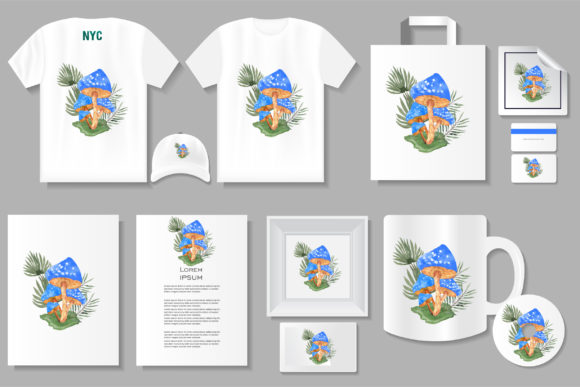
For those creating printable mockups to sell digital products or preview physical goods, this illustration offers excellent versatility. The blue tones photograph well under various lighting conditions, which is a huge plus for online listings. However, remember that a mockup is not the reality. Always compare your light and dark fabric backgrounds. A design that looks stunning on white linen might vanish on navy blue fleece unless the digitizer has accounted for outline stitches or lighter thread variations.
Final Designer Notes and Best Practices
Before you integrate the Watercolor Elegant Blue Mushroom Clipart into your workflow, here is a checklist based on real experience:
- Test First: Always stitch out a sample on scrap fabric identical to your final product. Look for pull-compensation issues.
- Check Licensing: Confirm whether the license allows for commercial embroidery sales or if it is for personal use only. This is vital for craft business owners.
- Inspect Details: Zoom in on the embroidery file preview. Are the tiny details in the gills actually stitchable, or will they cause thread breaks?
- Color Contrast: Ensure there is enough distinction between the different shades of blue, especially if stitching on darker fabrics.
- Stabilizer Choice: Match your stabilizer to the fabric weight. Watercolor styles often benefit from a cut-away stabilizer on garments to prevent distortion over time.
In conclusion, this illustration holds significant potential for elevating your embroidery project portfolio. It bridges the gap between artistic illustration and functional design. Whether you are making an embroidered patch for a jacket or a central motif for a nursery blanket, the key lies in respecting the limitations of the medium while leveraging the unique mood of the design. With proper testing and attention to detail, the Watercolor Elegant Blue Mushroom Clipart can be a standout asset in your creative toolkit.